What is it?
With calcific tendinitis, calcium sits in one of the tendons of your rotator cuff, the muscles that keep your upper arm centred in the socket. It usually involves the supraspinatus tendon, on top of your shoulder. You feel the pain around the top of your shoulder and upper arm, and raising your arm hurts most.
The calcium goes through phases. While it builds up and then rests, you often have little pain. The worst pain comes when your body clears the calcium, through an inflammatory reaction around the deposit.
Some people have calcium in the shoulder without any symptoms. Calcific tendinitis differs from frozen shoulder, where the joint capsule stiffens. For general information on shoulder pain, see our shoulder complaints page.
Common causes
- A disrupted healing process in the tendon (the exact cause is unknown)
- Middle age
How we diagnose
Your physiotherapist asks how your symptoms started and examines your shoulder, shoulder blade and neck. That way we tell calcific tendinitis apart from frozen shoulder, osteoarthritis or pain referred from your neck.
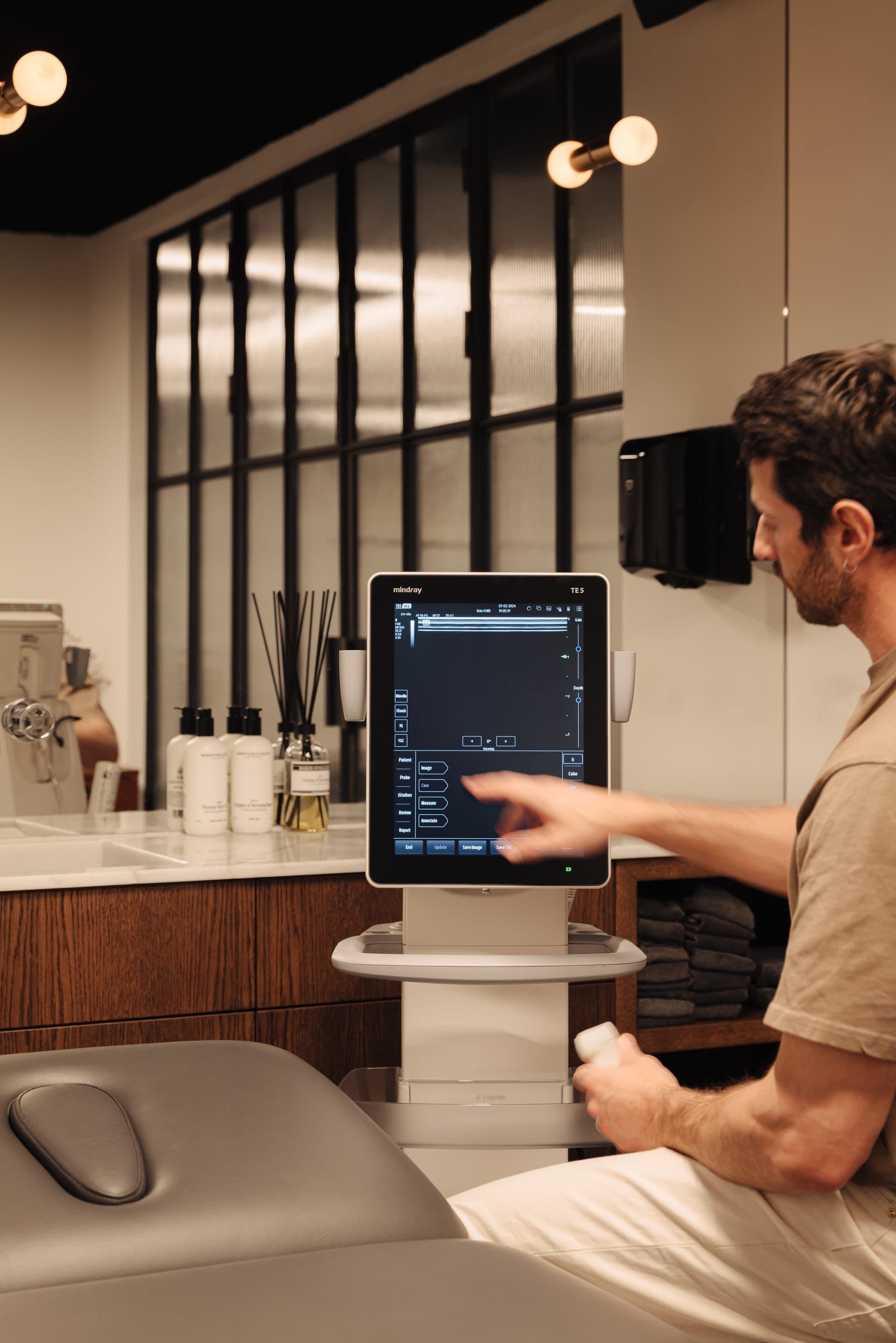
Only imaging shows calcium. With ultrasound your physiotherapist can sometimes see a deposit, as a supplement to the examination. If symptoms persist after three months of treatment, your GP requests an ultrasound or X-ray.
Treatment approach
During a severe pain flare, you discuss pain relief with your GP, who may also consider an injection. Your physiotherapist helps you keep moving within the pain. After that you build strength and control in your rotator cuff and shoulder blade step by step, at home and in our gym.
If an ultrasound shows calcium and exercise, pain relief or an injection have helped too little after about three months, your physiotherapist can add shockwave. That happens in your regular appointment, with no surcharge.
Expected recovery
Calcific tendinitis often resolves on its own: your body clears the calcium and the pain goes away. That can take longer than a year, and some people keep having symptoms.
Your physiotherapist keeps your shoulder strong and mobile during that time, and reviews with you whether a next step is needed.