RSI & Repetitive Strain Injury

RSI treatment for mouse arm, tingling fingers and wrist pain from computer work

RSI & Repetitive Strain Injury
5/5(479 reviews)

What is it?

RSI stands for Repetitive Strain Injury. In the Netherlands it's also known as KANS, complaints of the arm, neck and/or shoulder. It's an umbrella term for complaints that develop from prolonged, repetitive movements or a long static posture, usually during screen-based work. This includes the well-known mouse arm, but also neck complaints, shoulder complaints and tingling in the fingers.

RSI usually develops gradually. At first you might only notice some stiffness at the end of the working day. Without adjustment, complaints can increase and may also become noticeable during activities outside of work. Exercise therapy and a well-arranged workstation can help contribute to recovery and reducing complaints.

At Physical Studio we look not only at the spot where you feel pain, but at posture, load and work habits as a whole. Our physiotherapists are also personal trainers, which lets us align treatment with building strength and load capacity in a coherent way.

Common causes

  • Prolonged mouse use with an incorrect wrist or arm position
  • Static neck posture during screen work, for example from a monitor set too low or too high
  • Too little variation in posture and movement throughout the working day
  • Insufficient breaks during prolonged repetitive work
  • A workstation that isn't matched to your body dimensions (desk, chair, screen height)
  • High workload and time pressure, which increases tension in the neck and shoulders
  • Insufficient overall load capacity of the arm, neck and shoulder, for example from little movement outside of work
  • Previous wrist, arm or neck complaints that haven't fully resolved

How we diagnose

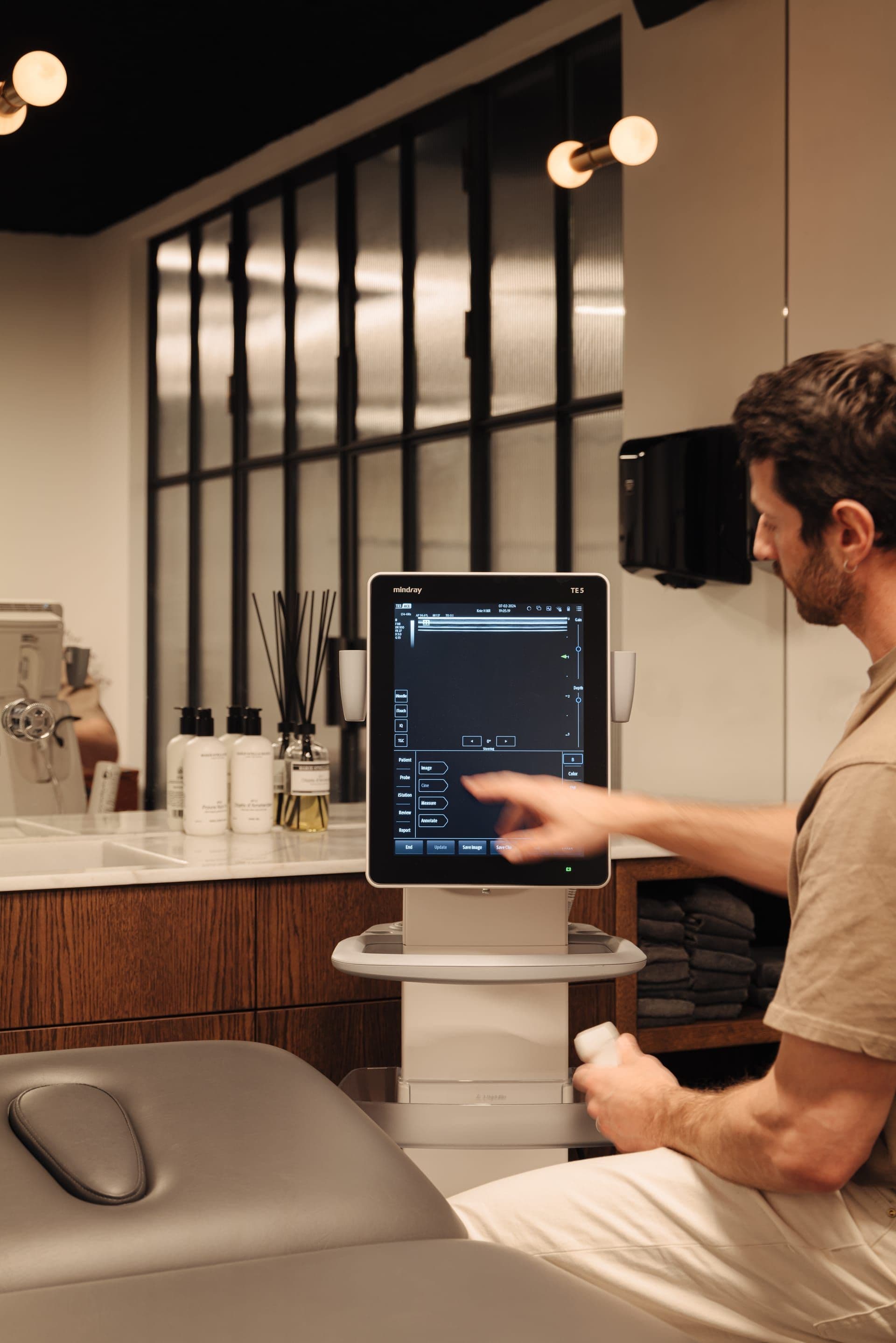
During the intake we map out where your complaints are located, when they occur and what your working day and workstation look like. A movement assessment of the neck, shoulder, arm and wrist shows where load capacity is falling short and which movements trigger complaints. Where clinically relevant, we use ultrasound to assess muscle and tendon tissue and rule out other causes of the complaints. Based on this, we determine together with you which factors are contributing to your complaints, including posture and workstation setup.

Treatment approach

Treatment of RSI complaints at Physical Studio combines exercise therapy, manual therapy and practical guidance on your workstation and work habits. Manual therapy can be used to help reduce tension in the neck and shoulder and improve joint mobility. With targeted exercises we gradually build up the strength and load capacity of the arm, wrist and shoulder, so your body becomes better able to handle the demands of screen-based work. We also give practical advice on workstation setup, break behaviour and posture variation. Where it fits your goals, we combine physiotherapy with personal training to support the build-up towards full load capacity.

Expected recovery

Recovery from RSI complaints varies significantly from person to person and depends on the nature and duration of your complaints, and on how much your workstation and work habits can be adjusted. Mild, recently developed complaints often respond within a few weeks to exercise therapy and workstation adjustments. With longer-standing or recurring complaints, a programme of several months may be needed, with a gradual build-up of load. Consistency with exercises and workstation habits contributes strongly to a lasting result.

When to seek help

Seek advice from a physiotherapist if arm, neck or shoulder complaints persist for more than a few weeks, keep returning, or start to interfere with your work. See your GP (huisarts) if you experience persistent tingling, numbness or loss of strength in the hand or arm, if complaints keep you awake at night, or if there is sudden, severe pain or swelling without a clear cause. The GP can assess whether something else is going on and refer you further if needed.

Frequently asked questions

How do I recognise a mouse arm?
A mouse arm often shows up as a dull ache or fatigue in the forearm, wrist or shoulder on the side you use the mouse, sometimes with tingling in the fingers. Complaints usually increase during or after prolonged computer work and ease off during weekends or holidays. If in doubt, a physiotherapy assessment is a good first step.
Can I keep working with RSI?
In many cases you can keep working with adjustments, such as more variation, shorter breaks and a better-arranged workstation. How much you can keep doing depends on the severity of your complaints. We put together a build-up schedule with you that fits your recovery and your work.
What can I improve about my workstation?
Key points are a screen height at eye level, forearms that can rest relaxed, a chair that supports your back, and enough room to regularly change position. During treatment we give practical advice tailored to your workstation and complaints.
How long does recovery from RSI complaints take?
This differs per person and depends on the nature and duration of your complaints. Mild, recent complaints often improve within a few weeks, while longer-standing complaints can require several months of gradual build-up. We discuss a realistic timeline for your situation during the intake.
Is RSI the same as KANS?
KANS stands for complaints of the arm, neck and/or shoulder and is the Dutch term often used instead of RSI. Both terms refer to complaints that develop from repetitive movements or prolonged static load, usually during screen-based work.
Does an ergonomic mouse or keyboard help?
Adapted equipment can help contribute to reducing load, but it doesn't automatically resolve underlying tension or a lack of load capacity on its own. We look together with you at whether adapted equipment makes sense as part of a broader plan.
Can sports make RSI complaints worse?
That depends on the sport and the nature of your complaints. Some movements can increase load on an already overloaded area, while targeted training can instead help build load capacity. We give advice that fits your complaints and sporting activities.
When is ultrasound useful for RSI complaints?
Ultrasound can be used when we want to assess muscle or tendon tissue more precisely or rule out other causes. Not every RSI complaint requires ultrasound, we decide this case by case based on the movement assessment and your pattern of complaints.
Is treatment for RSI complaints covered by my health insurance?
Physiotherapy for RSI complaints is typically covered from supplementary (aanvullende) insurance, not from the basic insurance. How many sessions and what amount are covered depends on your individual policy. Check your policy or use the insurance checker on our site to see what applies to you.

Related conditions

Does this sound familiar? Book an appointment.

Our physiotherapists are happy to help you with a personalized treatment plan.