Tennis Elbow

Tennis elbow treatment for pain on the outside of your elbow, with targeted exercise therapy and manual therapy.

Tennis Elbow
5/5(479 reviews)

What is it?

Tennis elbow, also known as lateral epicondylitis, is an overuse condition affecting the tendon attachments on the outside of your elbow. The tendons of your forearm's extensor muscles attach here, and become irritated or damaged from repeated strain. Despite the name, most people with tennis elbow don't develop it from playing tennis, but from repetitive hand and wrist movements: typing, using a screwdriver, lifting, or fine manual work.

The condition is characterised by pain on the outside of the elbow that worsens when gripping objects, shaking someone's hand, or lifting a cup. You'll often also notice a tender point just below the bony bump on the outside of your elbow. The condition usually develops gradually and can persist for weeks to months if the underlying load isn't addressed.

At Physical Studio we approach tennis elbow as a load capacity problem: the tendon currently can't handle the demand placed on it. Exercise therapy focused on gradually building the tendon's load capacity is the core of our approach, supported by manual therapy and practical advice about your daily strain.

Common causes

  • Repetitive wrist and hand movements, for example typing or mouse use
  • Work involving vibrating tools or frequent forceful gripping
  • Tennis or racket sports with a faulty backhand technique or a racket that's too heavy
  • A sudden increase in load, such as home renovation or garden work
  • Fine manual work like sewing, painting, or playing an instrument
  • Reduced tendon load capacity due to age or previous injuries
  • Insufficient recovery time between strenuous activities
  • Reduced strength or stability in the shoulder and wrist muscles

How we diagnose

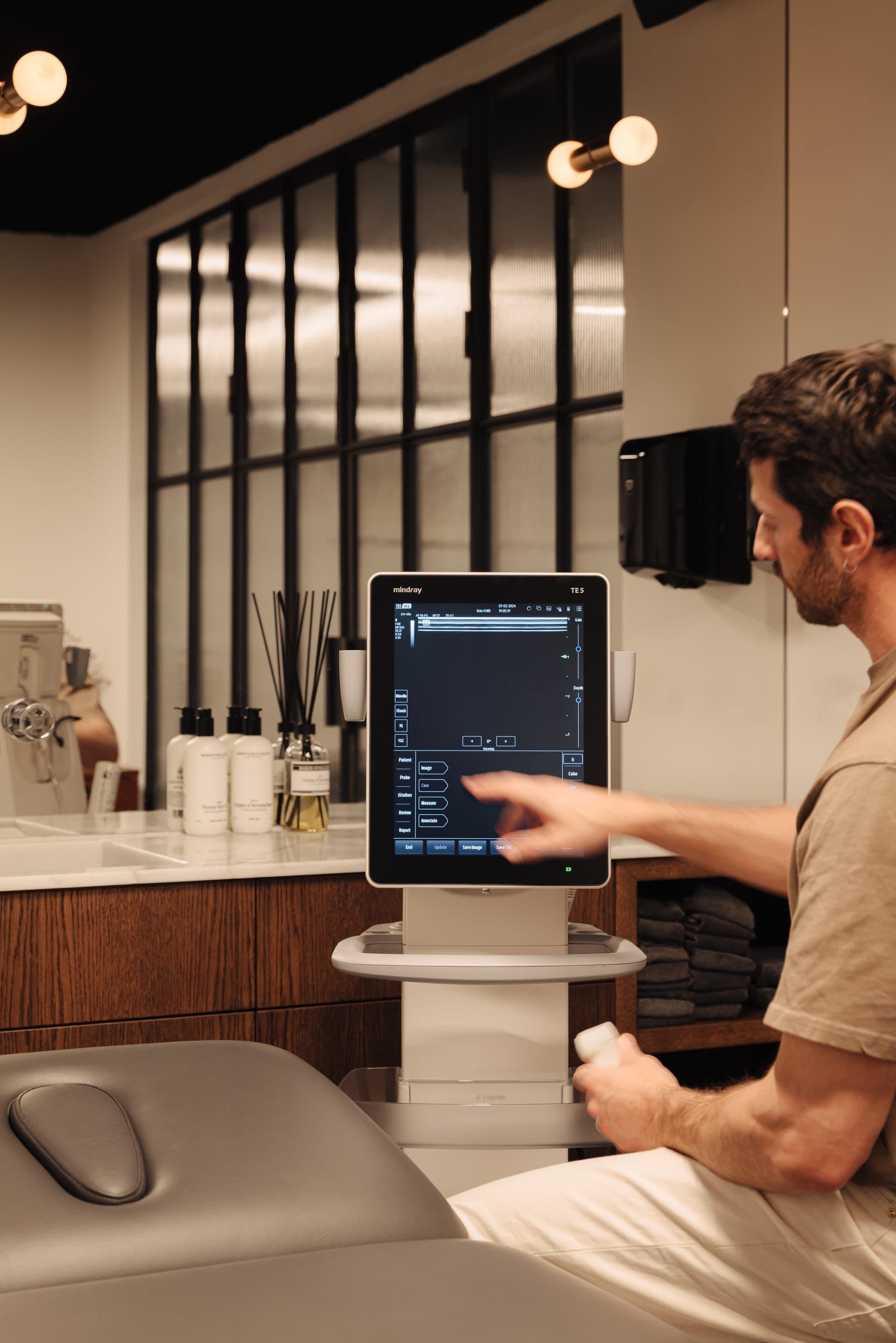
We start with a thorough intake in which we map out your symptoms, the demands of your work and sport, and how the complaint developed. This is followed by a physical examination with a movement analysis of the elbow, wrist and shoulder, and specific provocation tests typical for tennis elbow, such as applying resistance during wrist extension. Where clinically useful, we use ultrasound to assess the condition of the tendon attachment and rule out other causes of elbow pain. This gives us a complete picture of your load capacity so we can tailor treatment accordingly.

Treatment approach

Treatment of tennis elbow at Physical Studio focuses on gradually restoring the tendon's load capacity. Exercise therapy is central: we use eccentric and isometric exercises to progressively build strength and resilience in the forearm muscles. Manual therapy may be used to reduce tension in the forearm and wrist muscles and optimise mobility of the elbow and wrist. We also look together at your daily load: your workstation setup, sports technique, or lifting habits, so the complaint isn't repeatedly triggered. Our therapists guide you step by step, with exercises you can also do at home or at work.

Expected recovery

Recovery from tennis elbow is gradual and depends heavily on the nature and duration of your symptoms, how long the complaint has existed, and the extent to which the underlying load can be adjusted. Many patients experience a reduction in symptoms within a few weeks of starting exercise therapy, but full recovery of the tendon's load capacity can take several months. Patience and consistency with the exercise programme matter more than speed here.

When to seek help

Contact your GP if, alongside elbow pain, you also experience fever, significant swelling, redness, or a sudden severe increase in symptoms after a fall or impact, or if you notice tingling or loss of strength in your hand. These signs can point to a cause other than an overloaded tendon and warrant medical assessment. For the usual, gradually developing tennis elbow, you can see our physiotherapists directly, without a referral.

Frequently asked questions

What actually helps with tennis elbow?
Research shows that targeted exercise therapy, particularly eccentric and isometric exercises for the forearm, can be effective in building the tendon's load capacity. Rest alone usually doesn't resolve the problem. At Physical Studio we combine exercise therapy with manual therapy and advice on your daily load.
How long does recovery from tennis elbow take?
This varies by person and depends on the nature and duration of your symptoms. Many patients notice less pain within a few weeks, but fully strengthening the tendon often takes several months. Consistent exercise matters more than expecting a quick result.
Can I keep playing tennis or padel?
That depends on the severity of your symptoms and how your body responds to load. In consultation, we often adjust your technique, racket, or load first, and gradually rebuild sport activity alongside your exercise programme, rather than stopping completely or continuing without limits.
Does a tennis elbow brace help?
A tennis elbow brace can provide temporary relief for some people by slightly reducing the pulling force on the tendon attachment. It's not a replacement for exercise therapy, but can be used as a supportive aid alongside your treatment.
What's the difference between tennis elbow and golfer's elbow?
With tennis elbow, pain sits on the outside of the elbow, at the attachment of the extensor muscles. With golfer's elbow, pain sits on the inside, at the attachment of the flexor muscles. The treatment approach is similar, but the location and exercises differ.
Do I need a referral from my GP?
No, in the Netherlands you can see us directly through direct access physiotherapy, without a referral. During the intake we assess whether your complaint is suitable for physiotherapy treatment or whether additional medical assessment is advisable.
Is treatment covered by my health insurance?
Physiotherapy for tennis elbow is typically covered under supplementary insurance, not the basic policy. Coverage depends on your specific policy and the number of sessions it includes. Check your policy or use the insurance checker on our site to see what applies to you.
Can I still do personal training with tennis elbow?
In many cases yes, with adjustments to upper body exercises that load the affected tendon. Our physiotherapists are also qualified personal trainers and tailor your training schedule to your recovery, so you can keep moving without aggravating the complaint.

Related conditions

Does this sound familiar? Book an appointment.

Our physiotherapists are happy to help you with a personalized treatment plan.