What is it?
Shoulder complaints are the third most common complaint in physiotherapy practice. The shoulder joint is the most mobile joint in the body, making it vulnerable to injuries. At Physical Studio we have extensive experience in diagnosing and treating all types of shoulder complaints.
From frozen shoulder and impingement to rotator cuff tears and instability: shoulder complaints can have a wide range of causes. Pain can develop gradually from overuse or occur suddenly after a fall or trauma.
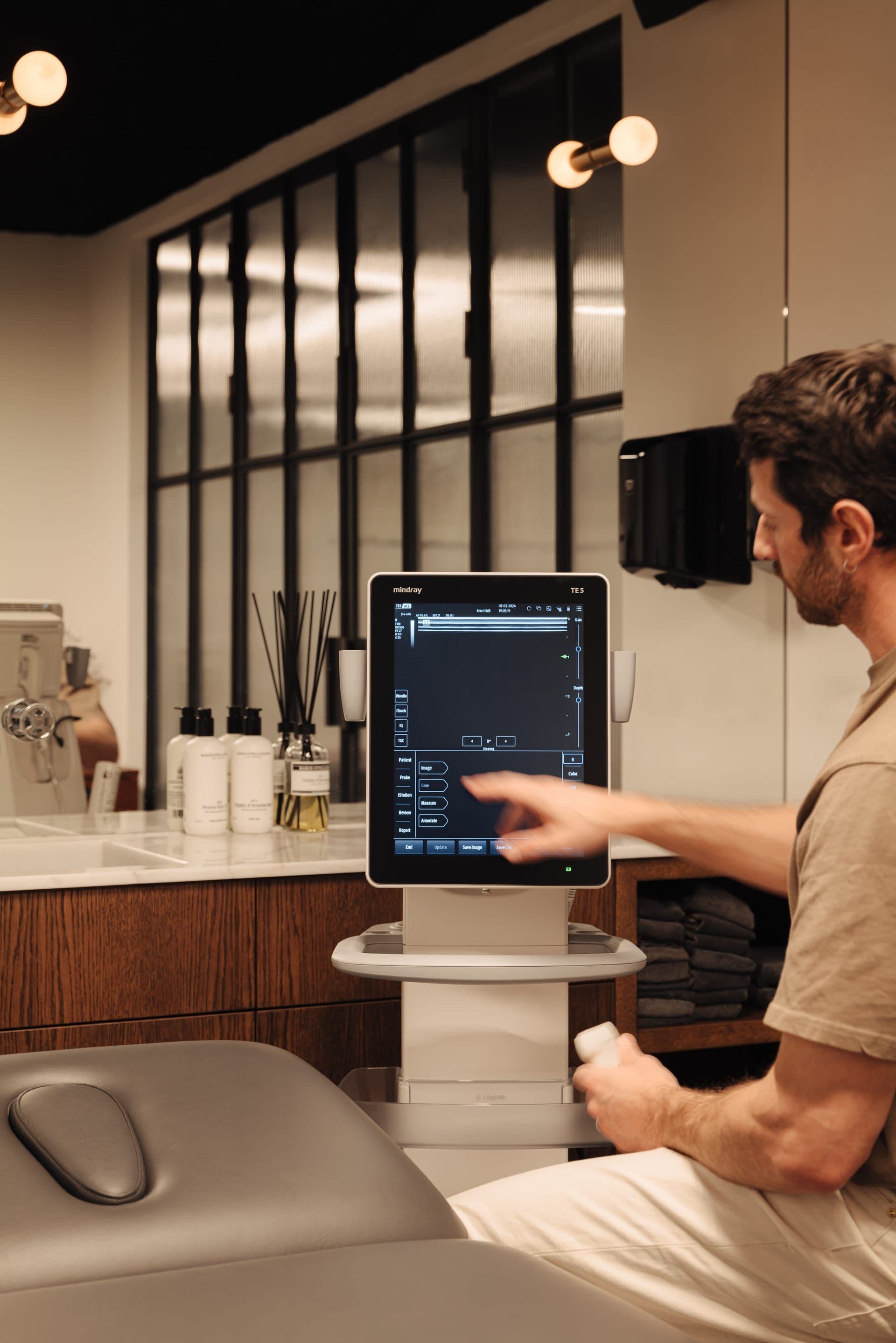
Our specialized therapists use ultrasound to directly assess the condition of tendons, muscles and bursae in the shoulder. This enables us to create an accurate treatment plan targeting your specific complaint.
Common causes
- Rotator cuff injury (tendinitis or tear)
- Impingement syndrome
- Frozen shoulder (adhesive capsulitis)
- Shoulder instability or dislocation
- Bursitis
- Osteoarthritis of the shoulder joint
- Overuse from sport or work
How we diagnose
Diagnostics for shoulder complaints is one of our specialties. We start with an extensive movement examination and specific shoulder tests. Ultrasound plays a central role: we assess the rotator cuff tendons, bursae and the joint in real time. This provides immediate insight into the cause of your complaints without the need for an MRI. With a biomechanical assessment we map muscle strength and movement patterns.
Treatment approach
Our shoulder treatment is structured in three phases. In the first phase we focus on pain reduction through manual therapy and possibly dry needling. In the second phase we work on restoring mobility and stability with targeted exercise therapy. In the third phase we build strength with personal training specifically targeting the shoulder and surrounding muscles. This integrated approach ensures complete recovery.
Expected recovery
Recovery times for shoulder complaints vary considerably. An impingement often improves within 4-8 weeks. A frozen shoulder can take 6-12 months. Rotator cuff injuries typically require 8-16 weeks of rehabilitation. We monitor your progress with objective measurements.