All health insurers · no referral needed

ConditionKnee & upper leg

Jumper's Knee

Jumper's knee (patellar tendinopathy): pain in the tendon below your kneecap. Treatment in Amsterdam with progressive strength training and testing.

Jumper's Knee

What is it?

Jumper's knee (patellar tendinopathy) is an overuse condition of the patellar tendon, which runs between your kneecap and your shinbone. You feel the pain at the front of your knee, just below the kneecap. The pain increases as you load your knee harder.

Jumping, sprinting and sudden braking put the most demand on this tendon. The condition is common in volleyball, basketball, football and hockey, and more common in men aged 18 to 35 who play a lot of sport. If you play padel or do plenty of jumps and deep squats in the gym, you load the same tendon.

Pain at the front of the knee can have other causes too. If you are not yet sure where your knee pain comes from, see our knee pain page as well.

Common causes

  • Lots of jumping, sprinting and braking
  • Training more or harder than your tendon is used to
  • Weak thigh, glute and calf muscles
  • Landings where your knee does most of the work
  • Too little recovery time

How we diagnose

We ask when the pain started, which movements bring it on and how you have built up your training. Your physiotherapist then examines your knee and the rest of your leg. Tenderness just below the kneecap, and pain that rises as an exercise gets heavier, fit jumper's knee.

With VALD Force Decks we measure how each leg pushes off and lands, so you can see differences between left and right.

Treatment approach

The foundation is an exercise programme that increases the load on your tendon step by step. You start with heavy, slow strength exercises and work towards faster, more explosive work. You train under supervision in our gym.

Most people do not need to stop sport. Your physiotherapist agrees how much jumping and sprinting your tendon can handle, and adjusts that to your pain during sport and the day after.

Expected recovery

Expect months: most people spend about three months on their exercises. If you have had symptoms for longer, it often takes more time.

You rebuild jumping and sprinting in stages, until both legs push off and land in a similar way on the force plates. Together you then decide when to return to matches.
Frequently asked questions

Jumper's knee or runner's knee: what is the difference?
With jumper's knee the pain sits at the front of your knee, in the tendon just below the kneecap. With runner's knee the pain sits on the outside, at the iliotibial band. Runner's knee often shows up only after a certain distance of running.
Can I keep playing sport with jumper's knee?
In most cases yes, in an adapted form: you train for shorter periods and at lower intensity, with fewer jumps and sprints. Strength training is part of your recovery, but you adapt exercises that overload your tendon for now, such as heavy deep squats. Swimming keeps your fitness up.
How long does jumper's knee take to heal?
Expect months. Most people spend about three months on their exercises, and symptoms that have lasted a long time often need more. Strength measurements show you where you stand along the way.
Does shockwave help jumper's knee?
The evidence is weak. In research, shockwave did no better than a sham treatment, and the Dutch guideline finds it makes little to no difference. Exercise therapy is the treatment, and your physiotherapist discusses with you what suits your knee.
Do tape or an injection help jumper's knee?
Dutch GPs advise against tape, insoles and a corticosteroid injection. Researchers have not shown that tape or insoles help. The best-supported treatment is an exercise programme that builds up the load on your tendon step by step.
Do I need a referral, and is it covered by insurance?
If your jumper's knee came on gradually, you can see us without a referral. Physiotherapy usually runs through your supplementary insurance, and your package decides how many sessions it covers.

Your first appointment

Intake Physiotherapy

covered by supplementary insurance

Does this complaint sound familiar? Start with an intake. You get a clear diagnosis and a treatment plan in the same appointment.

  • Full physical examination by a physiotherapist
  • Ultrasound diagnostics where needed
  • Diagnosis and treatment plan in the same appointment
  • Book online right away, no referral needed
Book your intake
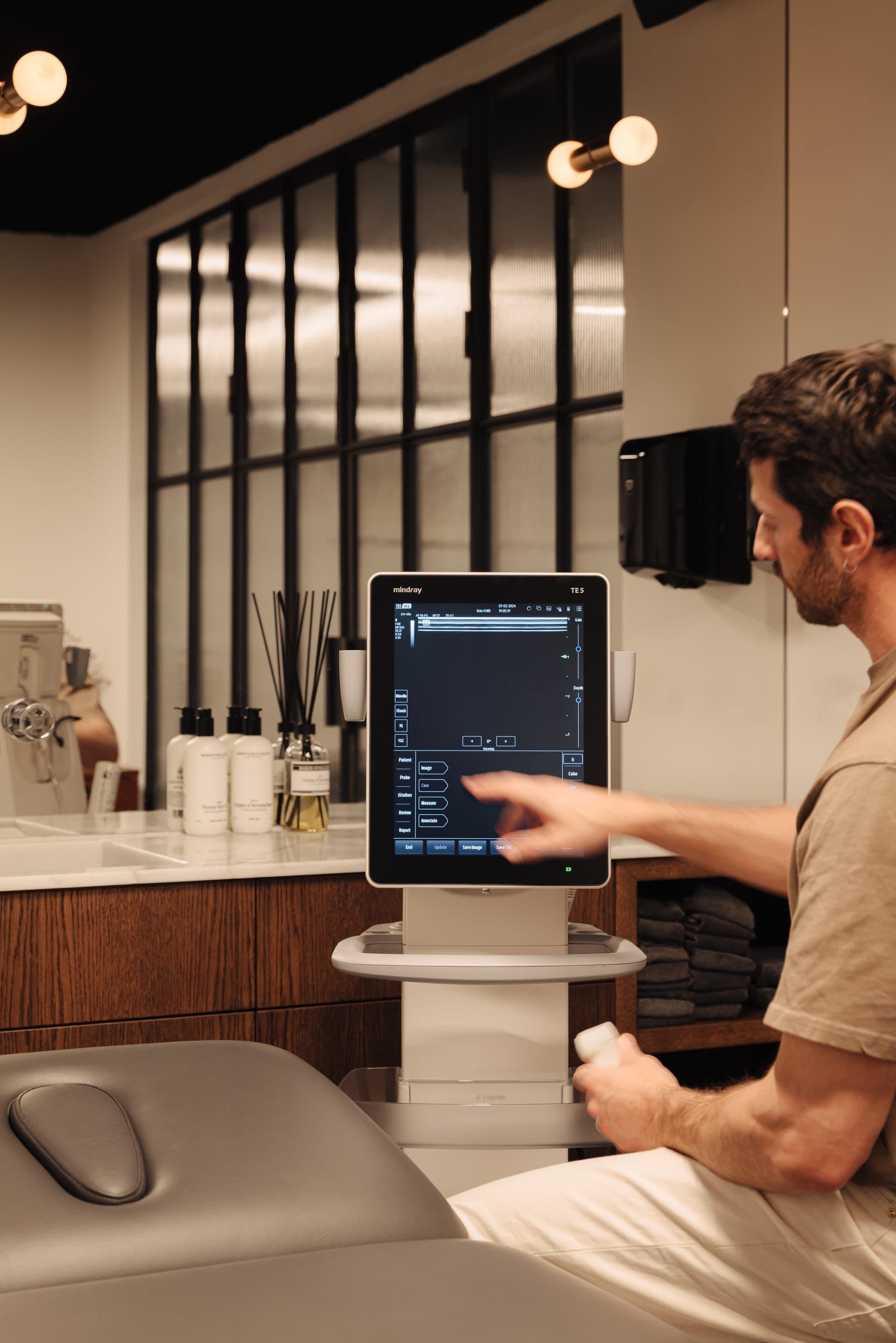
Ultrasound diagnostics in a Physical Studio treatment room