Runner's Knee (ITBS)

Runner's knee treatment for pain on the outside of the knee during running, with targeted diagnosis and exercise therapy.

Runner's Knee (ITBS)
5/5(479 reviews)

What is it?

Runner's knee, also known as iliotibial band syndrome (ITBS), is a common overuse complaint among runners and cyclists. The iliotibial band is a tough band of connective tissue that runs from the hip along the outside of the thigh to just below the knee. With repeated bending and straightening of the knee, such as during running, this band can rub or place extra pressure on the tissue around a bony point on the outside of the thigh bone (the lateral epicondyle). That can cause irritation and pain.

The complaint usually develops gradually and often only becomes noticeable after a certain distance or duration of running. Many runners recognise a sharp or burning pain on the outside of the knee that worsens during the run and eases again once they stop. Runner's knee is often linked to a rapid increase in training volume, running on slopes or a road camber, and certain running patterns.

At Physical Studio we look beyond the knee itself. Because runner's knee is often connected to hip stability, leg alignment and running technique, we map out those factors before putting together a treatment plan.

Common causes

  • A rapid increase in training volume or intensity
  • Running on slopes or a cambered road surface
  • Weak hip-stabilising muscles, particularly the hip abductors
  • Reduced flexibility of the iliotibial band and surrounding muscles
  • An altered running pattern, such as excessive hip adduction while running
  • Worn-out or unsuitable running shoes
  • Leg length difference or atypical leg alignment
  • Insufficient recovery time between training sessions

How we diagnose

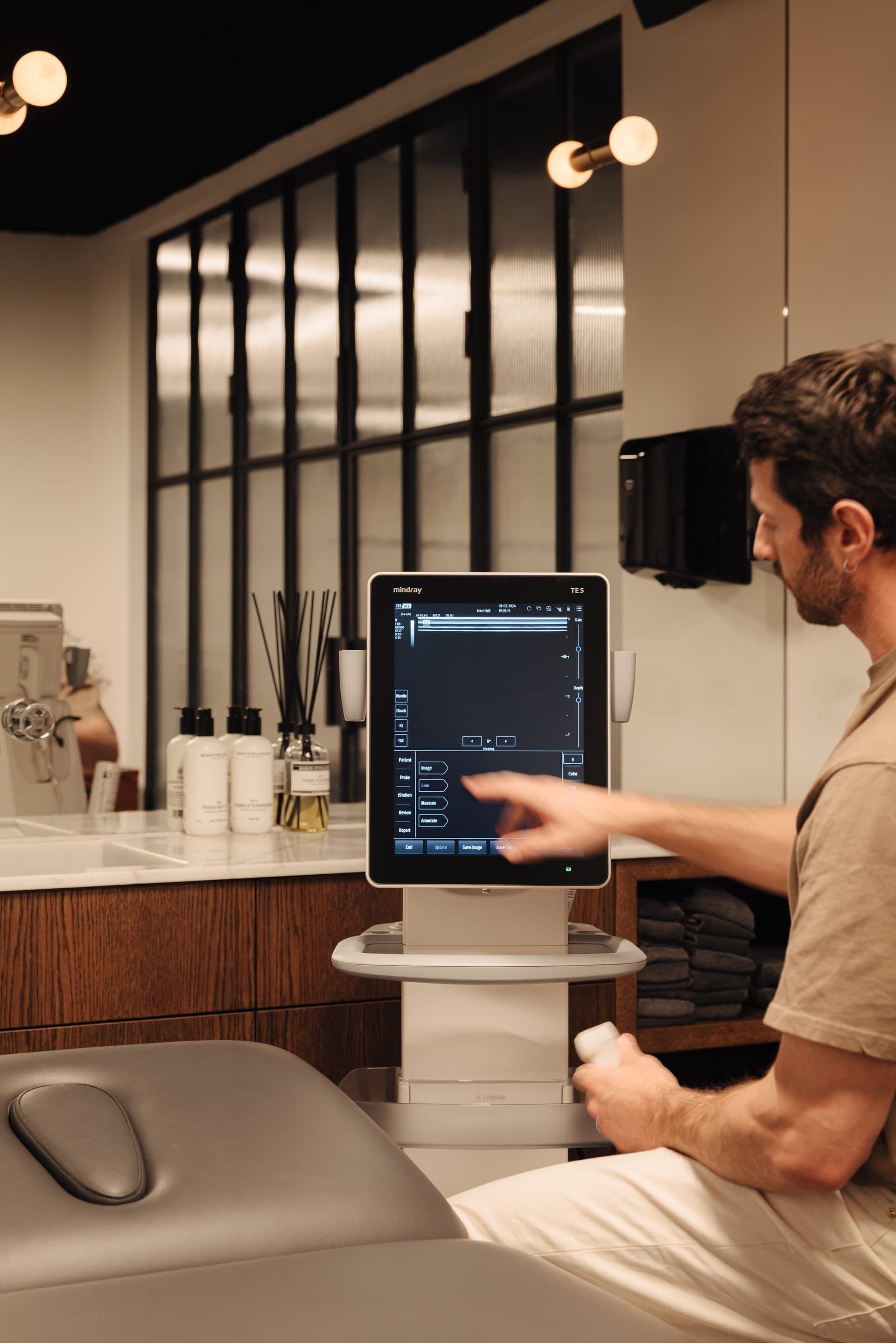
During the intake we map out when and how the pain occurs, how much you train and what has recently changed in your training. Specific provocation tests help us assess whether the complaint fits iliotibial band syndrome and rule out other causes of knee pain. A running technique analysis shows how your hip, knee and ankle move in relation to each other while running, and whether that movement pattern carries risk factors. Where clinically useful, we use ultrasound to assess the soft tissue around the knee. With VALD Force Decks we objectively measure the strength of your hip and leg muscles, so we know exactly where a training plan needs to focus.

Treatment approach

Treatment of runner's knee at Physical Studio is focused on addressing the underlying cause of your complaints. In the early phase this often means temporarily adjusting your training load, discussed with you and matched to your goals. After that we build a targeted exercise programme with attention to hip stability, hip abductor strength and leg alignment while running. Manual therapy can be used to reduce tension in the hip and thigh muscles and take pressure off the structures around the knee. Where relevant, we give practical advice on running technique, how to rebuild training volume and footwear. Our physiotherapists are also personal trainers, so we can guide you through the whole path towards full training capacity and a stronger running pattern in one programme.

Expected recovery

Recovery from runner's knee varies significantly from person to person and depends on the nature and duration of your complaints, how long you have been dealing with them, and how consistently you follow the exercise programme. For many runners, mild complaints that have only just started respond within a few weeks to an adjusted training build-up and targeted exercises. When complaints have been present for longer, the process can take several months, since strength and running pattern need to be rebuilt gradually. We regularly evaluate how you respond to the load along the way, so the training plan can be adjusted accordingly.

When to seek help

Contact us or your GP if the pain on the outside of your knee persists despite rest, if your knee feels unstable or seems to give way, if there is significant swelling, redness or fever around the knee, or if the pain is also present at rest or at night. These signals can point to a cause other than runner's knee and deserve further medical assessment.

Frequently asked questions

Can I keep running with runner's knee?
That depends on how severe your complaints are. With mild irritation, adjusted running may sometimes still be possible, while persistent pain during running usually calls for training less or differently for a while. We work out a loading schedule together with you that matches your complaints and training goals.
Why does the pain always start at the same point in my run?
That pattern fits with overloading of the iliotibial band: friction builds up the longer or more intensely you run. Fatigue of the hip-stabilising muscles often plays a role in this. A running technique analysis helps us map out what changes in your movement at that point.
How long does recovery from runner's knee take?
That depends on the nature and duration of your complaints. With recently developed complaints, many runners see improvement within a few weeks, while longer-standing complaints can take longer to resolve. We evaluate regularly how you respond as training load is built back up.
Is it down to my shoes or running technique?
Footwear and running technique can play a role, but are rarely the only factor. Training build-up, hip strength and leg alignment often contribute as well. A running technique analysis combined with strength testing helps us identify which factors are most relevant for you.
Can I keep cycling or strength training in the meantime?
In many cases, alternative forms of exercise, such as cycling with an adjusted saddle position or targeted strength training, can remain part of your programme. We look together at what fits well with your complaints.
Do I need to stop running completely to recover?
Stopping completely is not always necessary. Adjusting distance, pace or running surface is often enough on its own, combined with hip stability exercises. We determine a responsible build-up together with you.
Does stretching the iliotibial band help with runner's knee?
Stretching can contribute to a more comfortable feeling in the area, but usually does not address the underlying cause. Research shows that targeted hip strengthening exercises often play a more important role in recovery than stretching alone.
Can runner's knee come back later?
The risk of relapse decreases when the underlying cause, such as hip weakness or too rapid a training build-up, has been properly addressed. That is why treatment also focuses on a more sustainable training build-up, to reduce the chance of it coming back.
Is treatment for runner's knee covered by insurance?
Physiotherapy for runner's knee is typically covered under supplementary insurance, not the basic policy. Coverage varies by policy and insurer. Check your policy or use the insurance checker on our site to see what applies to you.

Related conditions

Does this sound familiar? Book an appointment.

Our physiotherapists are happy to help you with a personalized treatment plan.