Bursitis

Bursitis treatment for the hip, shoulder or knee: targeted physiotherapy guided by ultrasound and movement analysis.

Bursitis
5/5(479 reviews)

What is it?

Bursitis is inflammation of a bursa, a small fluid-filled sac that cushions friction between bone, muscle and tendon. Bursae are found throughout the body, but complaints occur most often at the hip, shoulder, elbow and knee. When inflamed, the bursa becomes irritated and swollen, causing localised pain that often increases with pressure, certain movements, or after a period of overload.

Bursitis usually develops gradually, through repeated strain or a change in movement pattern, and sometimes through a direct knock or prolonged pressure on the bursa. Symptoms can vary in intensity and may return if the underlying cause isn't addressed.

At Physical Studio we look not only at the inflamed bursa itself, but also at what's driving the overload: posture, muscle balance, movement pattern or training build-up. Exercise therapy is aimed at reducing irritation and building up load capacity, so you can keep moving, training or working sustainably.

Common causes

  • Prolonged or repeated pressure on a joint, for example frequent kneeling or leaning on the elbow
  • Overload from repetitive movement, such as running, cycling or overhead sports
  • Too rapid an increase in training intensity or volume
  • A direct knock or fall onto the joint
  • Disrupted muscle balance or movement pattern around the hip or shoulder
  • Prolonged sitting or lying on a hard surface
  • An underlying joint condition near the bursa
  • In rare cases, an infection of the bursa

How we diagnose

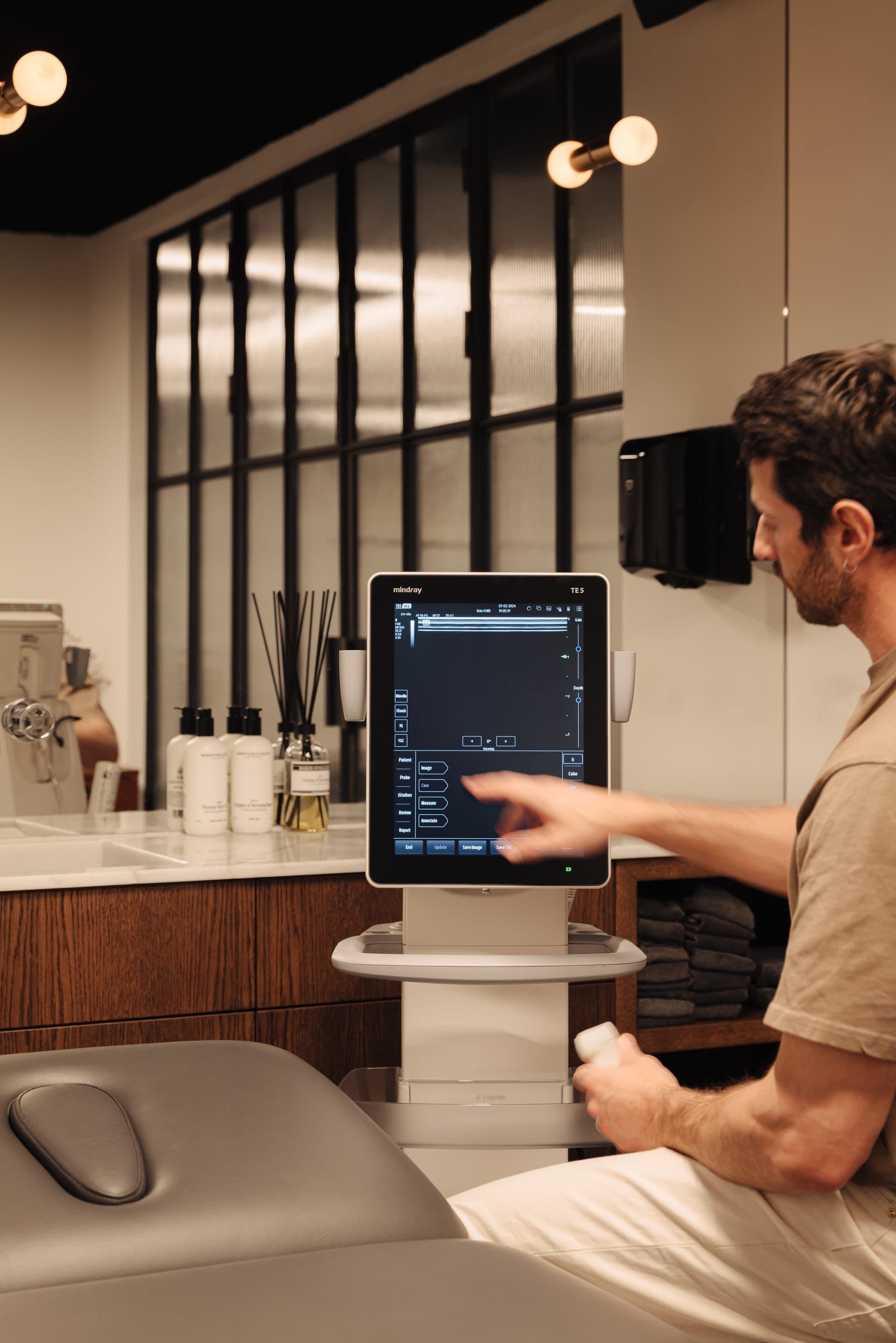
During the intake we map your symptoms, load and movement history: when the pain started, exactly where it sits, and which movements or positions make it worse or better. A movement analysis assesses how your hip, shoulder or knee functions and whether a disrupted movement pattern or muscle imbalance is adding extra load to the bursa. Where clinically appropriate, we use ultrasound to visualise the bursa and surrounding tissue. This lets us objectify swelling or fluid build-up and distinguish it from other causes of the symptoms, such as tendon irritation. With VALD Force Decks we can also objectively map strength and load capacity where relevant.

Treatment approach

Treatment of bursitis at Physical Studio focuses on reducing irritation and gradually restoring load capacity. Together with you, we set up a build-up schedule in which load is temporarily adjusted, so the inflamed bursa can settle without you stopping movement altogether. Exercise therapy is the core of treatment: targeted exercises to improve muscle balance and movement pattern around the joint, addressing the underlying overload. Manual therapy can be used to reduce tension in surrounding muscles and joints and restore mobility. Where needed, we combine physiotherapy with personal training, so the build-up towards full load and sport happens in a structured and safe way.

Expected recovery

Recovery from bursitis varies significantly from person to person and depends on the nature and duration of your symptoms, the location of the bursa, and the degree of overload that preceded it. Mild symptoms can noticeably ease within a few weeks when load is adjusted in time, while more persistent or long-standing complaints may need several months of guidance. Because the underlying cause is often linked to posture, movement pattern or training build-up, the final phase of recovery focuses on adjusting those factors sustainably, to reduce the likelihood of symptoms returning.

When to seek help

Contact your GP if the skin around the joint is red, warm or painfully swollen and you also have a fever, as this can indicate an infection of the bursa that needs prompt assessment. Also see your GP for severe pain that doesn't ease at rest, a joint you can no longer move, or after a significant trauma such as a fall. If in doubt, it's always sensible to get a medical assessment first to check whether direct physiotherapy treatment is appropriate.

Frequently asked questions

How long does bursitis last?
This depends on the nature and duration of your symptoms and the location of the bursa. Mild symptoms often ease within a few weeks with timely load adjustment, while more persistent cases can require several months of guidance. A tailored build-up schedule helps support recovery.
Is rest or movement better for bursitis?
Complete rest usually isn't necessary and can sometimes be counterproductive. What matters more is temporarily adjusting the load that's causing the irritation, combined with targeted exercises. This keeps the joint functional while giving the bursa a chance to settle.
Do I need an injection?
Not necessarily. Many patients experience improvement with exercise therapy and an adjusted loading schedule, without an injection. Whether an injection makes sense is a medical decision made by your GP or specialist; we focus on physiotherapy treatment and guidance.
Why does my bursitis keep coming back?
Recurring symptoms are often linked to an underlying cause that hasn't been fully addressed, such as a disrupted movement pattern, muscle imbalance or training build-up. Treatment therefore explicitly addresses these factors, to reduce the likelihood of relapse.
Can I still exercise with bursitis?
That depends on the severity of your symptoms and the sport you do. Modified movement is often possible while you recover. We put together a build-up schedule together, tailored to your symptoms and sporting goals.
Is bursitis treatment covered by insurance?
Physiotherapy is typically covered from supplementary insurance, not the basic policy, and coverage depends on your individual policy. Check your policy in advance, or use the insurance checker on our site to see what applies to you.
What's the difference between bursitis and tendinopathy?
Bursitis affects the fluid-filled sac around a joint, while tendinopathy affects the tendon itself. Symptoms can look very similar. With movement analysis and, where needed, ultrasound, we distinguish between the two so treatment can be targeted correctly.
Where does bursitis occur most often?
Bursitis occurs most often at the hip, shoulder, elbow and knee, since these joints tend to handle relatively more repeated load or pressure. The approach differs by location, depending on the surrounding muscles and movements involved.

Related conditions

Does this sound familiar? Book an appointment.

Our physiotherapists are happy to help you with a personalized treatment plan.