Sciatica
Sciatica treatment for radiating leg pain caused by irritation of the sciatic nerve

What is it?
Sciatica is the name for radiating pain along the sciatic nerve, the nerve that runs from your lower back through your buttock into your leg. The complaint arises when this nerve becomes irritated or compressed, often at the level of the lower back. A typical feature is pain that radiates from the buttock into the leg, sometimes as far as the calf or foot, often combined with a tingling or numb sensation.
Sciatica is a symptom rather than a diagnosis in itself: the radiating pain can have several underlying causes, ranging from temporary nerve irritation to a herniated disc pressing on the nerve root. At Physical Studio we always look at the underlying cause before putting together a treatment plan.
Most people with sciatica-type complaints improve with a targeted, active approach. Exercise therapy and manual therapy can help reduce symptoms and restore mobility, depending on the nature and duration of your complaints.
Common causes
- Herniated disc (a bulging or damaged spinal disc pressing on the nerve root)
- Spinal stenosis (narrowing of the spinal canal)
- Piriformis syndrome (tension in the buttock muscle irritating the nerve)
- Prolonged sitting or a one-sided work posture
- Pregnancy, due to changes in posture and pelvic position
- Muscle shortening or imbalance around the pelvis and lower back
- Overload from lifting or a sudden awkward movement
- Osteoarthritis or wear of the lower back vertebrae
How we diagnose
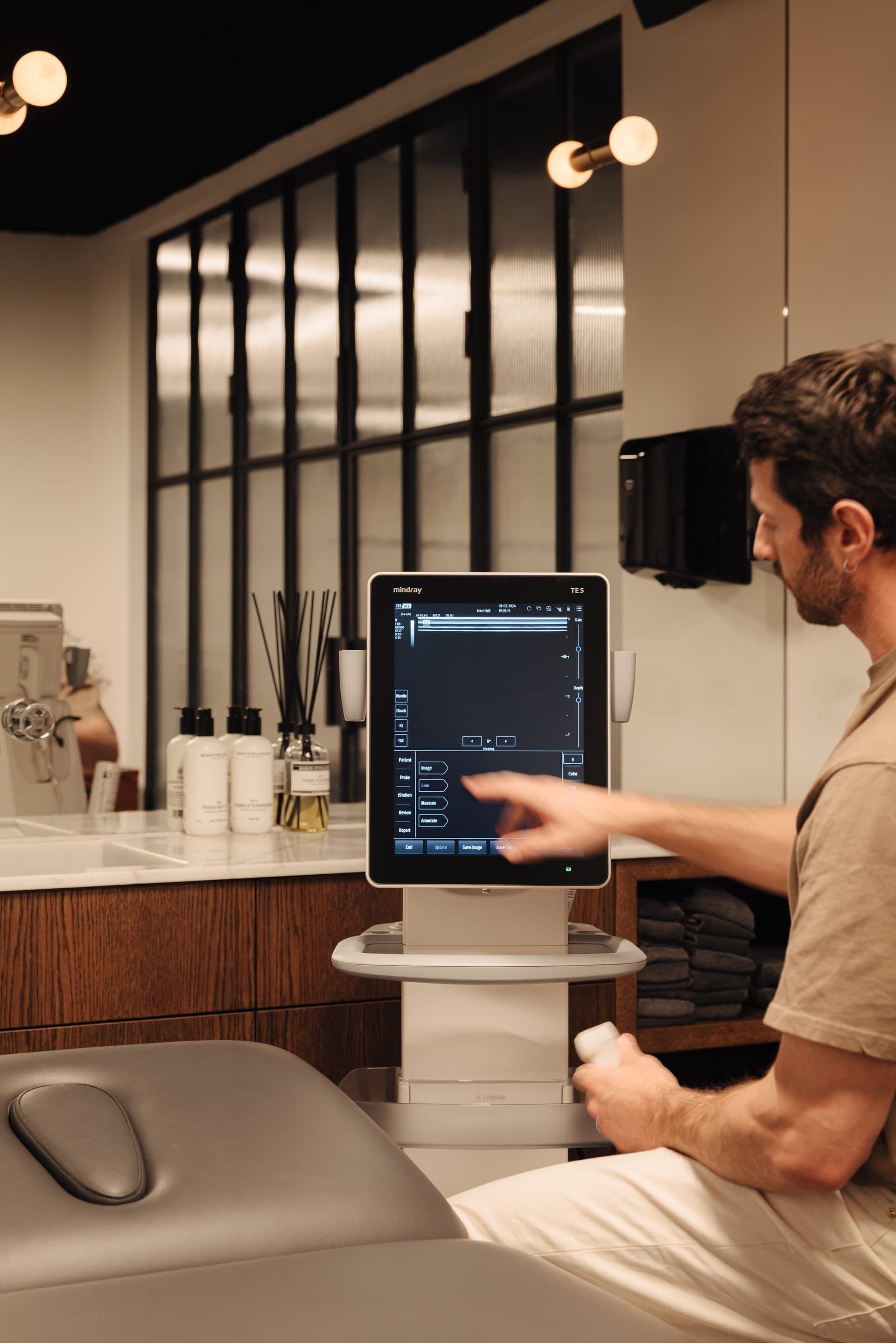
We start with a thorough intake in which we map out your complaints, posture and movement pattern. Neurological tests help us assess whether and where the nerve is being irritated, and a movement analysis shows which movements provoke or ease your pain. Where clinically relevant, we use ultrasound to assess muscle and tissue structure around the lower back and pelvis. Based on this, we identify what is likely contributing to your complaints and tailor the treatment plan accordingly.
Treatment approach
Treatment for sciatica-type complaints at Physical Studio focuses on reducing nerve irritation and restoring mobility and load capacity. We combine manual therapy, aimed at improving mobility in the lower back and pelvis, with exercise therapy that builds up strength and stability in your back and pelvis. Specific exercises can help reduce pressure on the nerve and lower the chance of recurrence. Where relevant we also look at work posture and daily movement habits, and guide the transition to personal training once that fits your recovery.
Expected recovery
Recovery from sciatica-type complaints varies a great deal from person to person and depends on the nature and duration of your complaints. With temporary nerve irritation, many people notice improvement within a few weeks with an active approach. When complaints are related to, for example, a herniated disc, recovery can take several months, with a gradual build-up of load. We always tailor the expected recovery timeline to your specific situation.
When to seek help
Contact your GP (huisarts) if, alongside the radiating pain, you notice loss of strength in your leg or foot, loss of control over your bladder or bowels, numbness in the saddle area, or if the pain started after a serious trauma. These signals can point to a more serious problem that needs prompt medical assessment. If in doubt, contacting your GP is always a sensible first step.
Frequently asked questions
What is the difference between sciatica and a herniated disc?
How do I get rid of sciatica quickly?
Which exercises help with sciatica?
When should I see a GP for sciatica?
Can I go straight to a physiotherapist for sciatica or do I need a GP referral first?
Is it better to keep moving with sciatica or rest?
Is treatment for sciatica covered by my health insurance?
Can ultrasound help identify the cause of sciatica?
Does this sound familiar? Book an appointment.
Our physiotherapists are happy to help you with a personalized treatment plan.