Hip Pain
Physiotherapy for hip pain: pain on the outside, front or groin of the hip, when walking or at rest.

What is it?
Physiotherapy for hip pain starts with mapping out exactly where the pain is coming from, because the hip is a complex joint where many structures come together. Pain on the outside of the hip, groin pain, or pain radiating to the buttock or thigh can have quite different underlying causes. At Physical Studio we regularly see hip complaints in both active athletes and people who sit or stand a lot for work.
The hip carries your body weight and is involved in almost every movement you make: walking, climbing stairs, standing up from a chair, sport. Complaints can build up gradually through overuse, or appear suddenly after an awkward movement. Wear of the hip joint (osteoarthritis) also occurs, especially in people over 50, and often presents a different pattern than, for example, an impingement in younger, sporty people.
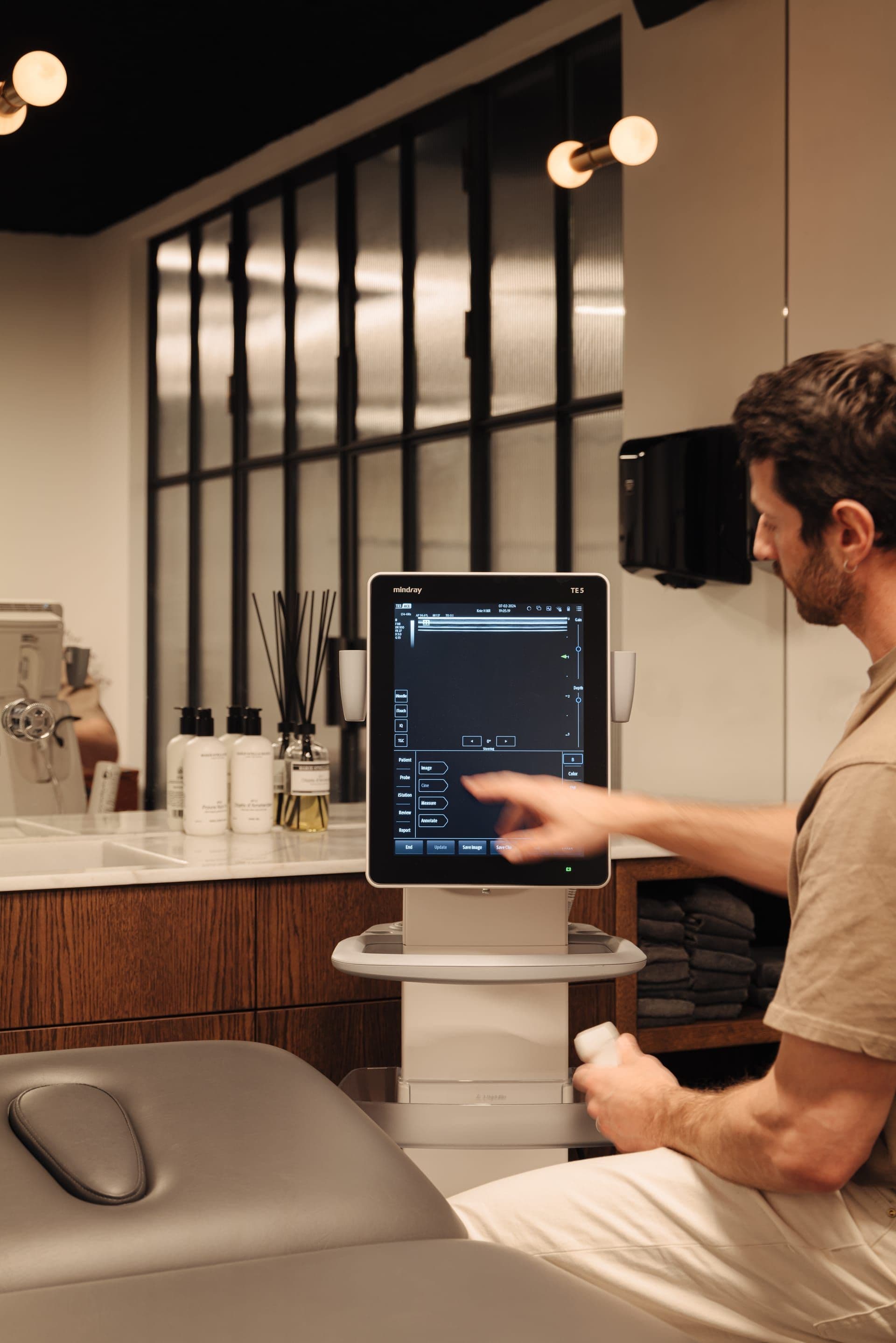
Because the hip plays such a central role in your movement pattern, an accurate diagnosis matters. At Physical Studio we combine a thorough intake with movement analysis and, where clinically relevant, ultrasound to assess the structures around the joint.
Common causes
- Hip impingement (FAI): bone contact between the femoral head and hip socket during certain movements
- Hip osteoarthritis: wear of the cartilage in the hip joint
- Bursitis: inflammation of the bursa on the outside of the hip
- Overuse of hip muscles, for example from running or frequent stair climbing
- Groin complaints from overuse of the hip muscle attachments
- Labral injury: damage to the cartilage ring around the hip joint
- Prolonged sitting leading to reduced hip mobility
- Reduced muscle strength or stability around the pelvis and hip
How we diagnose
We start with an extensive intake where we ask about how your complaints began, exactly where the pain is located and when it occurs, for example when walking, sitting or during specific sports movements. This is followed by a movement analysis looking at your gait pattern, hip mobility and the strength of the surrounding muscles. Where clinically useful, we use ultrasound to assess structures such as bursae and tendon attachments around the hip. With VALD Force Decks we can also objectively measure the strength and load capacity of your leg. Based on these findings we put together a personal treatment plan.
Treatment approach
Treatment of hip complaints at Physical Studio focuses on reducing pain and restoring function, with exercise therapy as the foundation. Research shows that targeted exercise therapy can be effective for many forms of hip pain, including impingement and early-stage osteoarthritis. We build an exercise programme tailored to your load capacity, focused on mobility, strength and stability around the hip and pelvis. Manual therapy can be used to help reduce tension in the tissues around the joint and support mobility. Where needed we combine physiotherapy with personal training, so you can rebuild towards sport or daily activities under guidance. We also give practical advice on loading and movement habits that can contribute to your recovery.
Expected recovery
Recovery from hip complaints varies significantly from person to person and depends on the underlying cause, the nature and duration of your symptoms. Overuse complaints and bursitis often respond to targeted exercise therapy within a few weeks to several months for many patients. Hip impingement and mild osteoarthritis usually require a longer, gradual build-up, often over several months. With osteoarthritis, the goal is mainly to improve function and manage symptoms, not to restore the cartilage itself. Throughout treatment we discuss what is realistic for your specific situation.
When to seek help
Contact your GP if you have severe hip pain after a fall or accident, if you cannot bear weight on your leg, if there is fever combined with a painful, warm or swollen hip, or if the pain persists at night and does not ease with rest. It is also wise to consult your GP first if you experience sudden, unexplained hip pain with no clear cause. If in doubt, you are always welcome to come in for an intake first, with direct access and no referral needed, after which we'll together determine whether a referral is necessary.
Frequently asked questions
Where does pain on the outside or front of my hip come from?
Is it osteoarthritis or bursitis?
Can I keep exercising with hip pain?
When is hip surgery needed?
What can I do myself about groin pain when walking?
How long before I notice improvement?
Is physiotherapy for hip pain covered by my health insurance?
Do I need a referral from my GP?
Does this sound familiar? Book an appointment.
Our physiotherapists are happy to help you with a personalized treatment plan.