All health insurers · no referral needed

ConditionLower leg, ankle & foot

Achilles Tendinopathy

Achilles tendinopathy treatment in Amsterdam: mid-portion or insertional, a tailored loading programme and shockwave when exercise alone does too little.

Achilles Tendinopathy

What is it?

Achilles tendinopathy is an overloaded, painful Achilles tendon: the tendon that connects your calf muscles to your heel bone. People often call it Achilles tendinitis. For a broader overview, for example after a sprained ankle, read our Achilles Tendon & Ankle Issues page.

Your physiotherapist distinguishes two forms. In mid-portion tendinopathy the pain sits more than two centimetres above the heel. In insertional tendinopathy it sits where the tendon attaches to the heel bone, and you start with different exercises.

Many people notice it first with their first steps in the morning: the tendon feels stiff and sore. During or after running, jumping or a long walk, the pain returns.

Common causes

  • A high load on your calf, for example from running or jumping
  • A rapid increase in training or activity
  • Weak calf muscles
  • Previous tendon problems in your leg
  • Use of certain antibiotics (fluoroquinolones)

How we diagnose

Your physiotherapist asks where and when the pain occurs and how you have trained. During the examination we find the location of the pain and test how your tendon responds to repeated heel raises. We also look for signs of a tear.

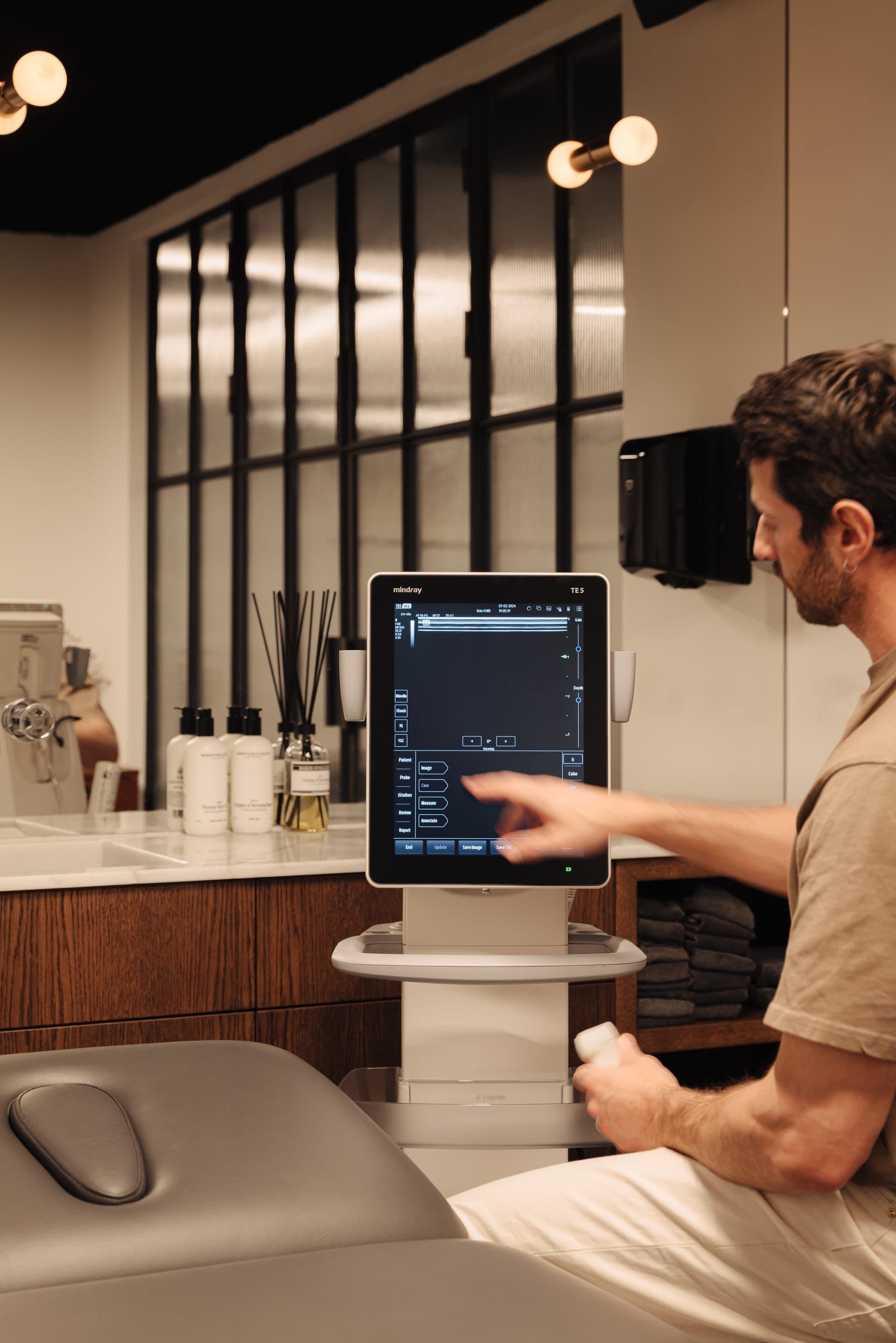
With VALD force plates we measure the strength of both legs. If in doubt, we look at your tendon with ultrasound in the studio.

Treatment approach

The core is a progressive strength programme for your calf, for at least twelve weeks. Several forms show similar results, so we choose what suits you and your sport. With a sensitive tendon you start with static exercises, with an insertional complaint on a flat floor.

You swap running and jumping for cycling or swimming for a while. If your tendon is still too sensitive after three months of training, your physiotherapist can use shockwave alongside your calf exercises, in a regular appointment and with no surcharge.

Expected recovery

Expect months. Waiting without treatment brings little improvement in the short term. For two in three people the complaint has resolved after a year; some have symptoms for longer, sometimes for years.

We re-test your strength and build up your sport to what your tendon can handle.
Frequently asked questions

Is Achilles tendinitis the same as Achilles tendinopathy?
In most cases people mean the same complaint. Achilles tendinitis is the familiar name. Tendinopathy is the term doctors and physiotherapists use for an overloaded, painful tendon.
Can I run with Achilles tendinopathy?
Often you can, in an adapted form. Pain up to 5 on a scale of 10 while running is acceptable, as long as it is back to your usual level by the next morning. If pain or stiffness increases from week to week, switch to cycling or swimming for a while.
How long does Achilles tendinopathy take to heal?
Expect months. A strength programme runs for at least twelve weeks. For two in three people the complaint has resolved after a year, and some have symptoms for longer.
Which exercises help with Achilles tendinopathy?
Progressive strength exercises for your calf muscles, for at least twelve weeks. Eccentric exercises, heavy slow resistance and other progressive forms show similar results. If you want to return to running or a jumping sport, you finish with jumping and hopping drills.
Does shockwave therapy help with Achilles tendinopathy?
It can be an addition if three months of exercise bring too little improvement. The evidence is low to very low, insertional complaints have little research behind them so far, and shockwave seems to add something mainly alongside exercise therapy. Your physiotherapist weighs it up with you and can start in the same appointment, after the assessment.
How do I know if my Achilles tendon is ruptured?
With a rupture the pain comes on at once, often during a single step or push-off. Many people feel or hear a snap and can no longer stand on their toes afterwards. If that happens to you, call your GP or the out-of-hours GP service.

Your first appointment

Intake Physiotherapy

covered by supplementary insurance

Does this complaint sound familiar? Start with an intake. You get a clear diagnosis and a treatment plan in the same appointment.

  • Full physical examination by a physiotherapist
  • Ultrasound diagnostics where needed
  • Diagnosis and treatment plan in the same appointment
  • Book online right away, no referral needed
Book your intake
Ultrasound diagnostics in a Physical Studio treatment room