What is it?
Achilles tendon and ankle complaints are common in athletes and active people. The Achilles tendon is the strongest tendon in the body but is also susceptible to overloading. The ankle is a frequently injured joint, especially in sports. At Physical Studio we have extensive experience treating these complaints.
Achilles tendon inflammation (tendinopathy) often arises from too rapid training progression or insufficient recovery. Ankle complaints range from acute sprains to chronic instability. Both types of complaints require a targeted approach to fully recover and prevent relapse.
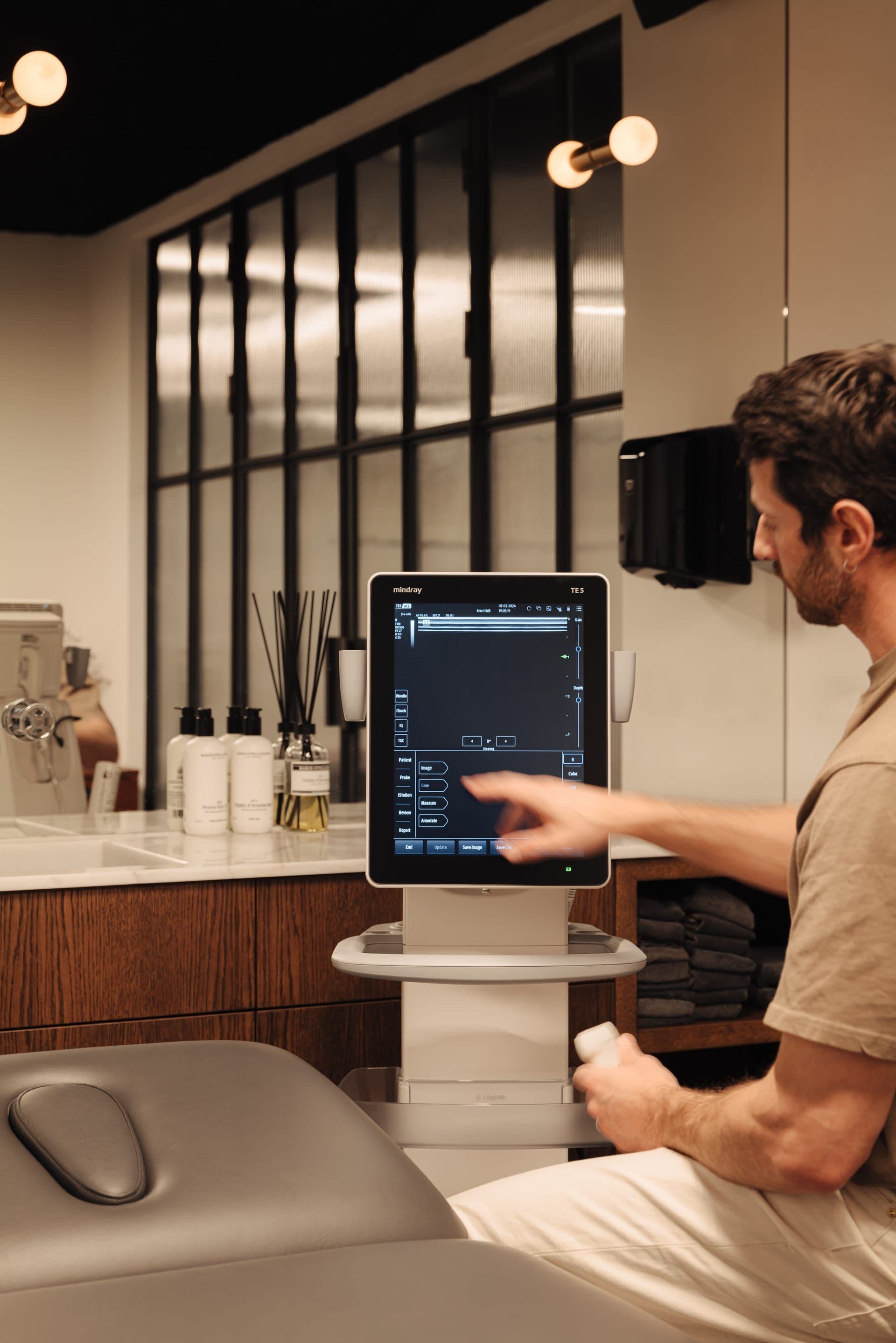
Our therapists use ultrasound to assess the Achilles tendon in detail and determine the severity of any injury. With a biomechanical analysis of your gait pattern, we identify risk factors for relapse.
Common causes
- Achilles tendinopathy (overuse)
- Achilles tendon rupture (tear)
- Ankle sprain (lateral ligament injury)
- Chronic ankle instability
- Peroneal tendinopathy
- Ankle impingement
- Heel spur and plantar fasciitis
How we diagnose
Ultrasound is an indispensable diagnostic tool for Achilles tendon and ankle complaints. We assess the structure and thickness of the Achilles tendon, the condition of the ankle ligaments and any fluid accumulation. Clinical tests for ankle stability and a biomechanical analysis of your gait pattern complete the diagnostic picture. With VALD Force Decks we objectively measure strength and jumping ability.
Treatment approach
Treatment of Achilles tendon and ankle complaints at Physical Studio is based on the latest scientific evidence. For Achilles tendinopathy, a progressive loading programme is central, where the tendon is gradually built up with specific exercises. For ankle injuries, we focus on restoring stability, proprioception and strength. Our integrated approach combines physiotherapy with personal training for optimal recovery.
Expected recovery
An ankle sprain typically recovers within 4-6 weeks, but stability training takes longer. Achilles tendinopathy requires an 8-12 week programme with gradual load increase. An Achilles tendon rupture (conservatively treated) needs a rehabilitation period of 4-6 months.